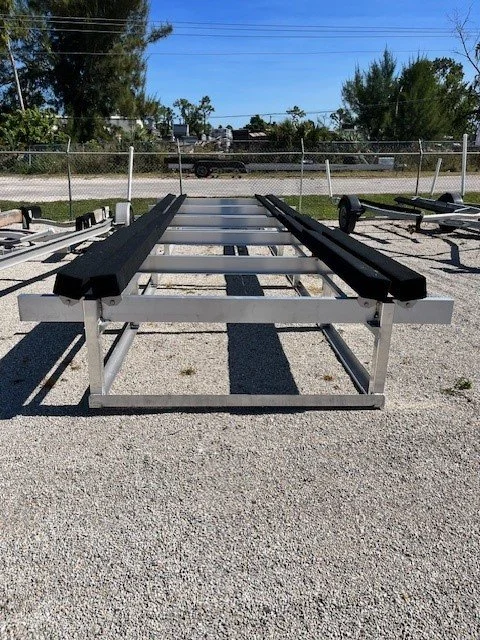
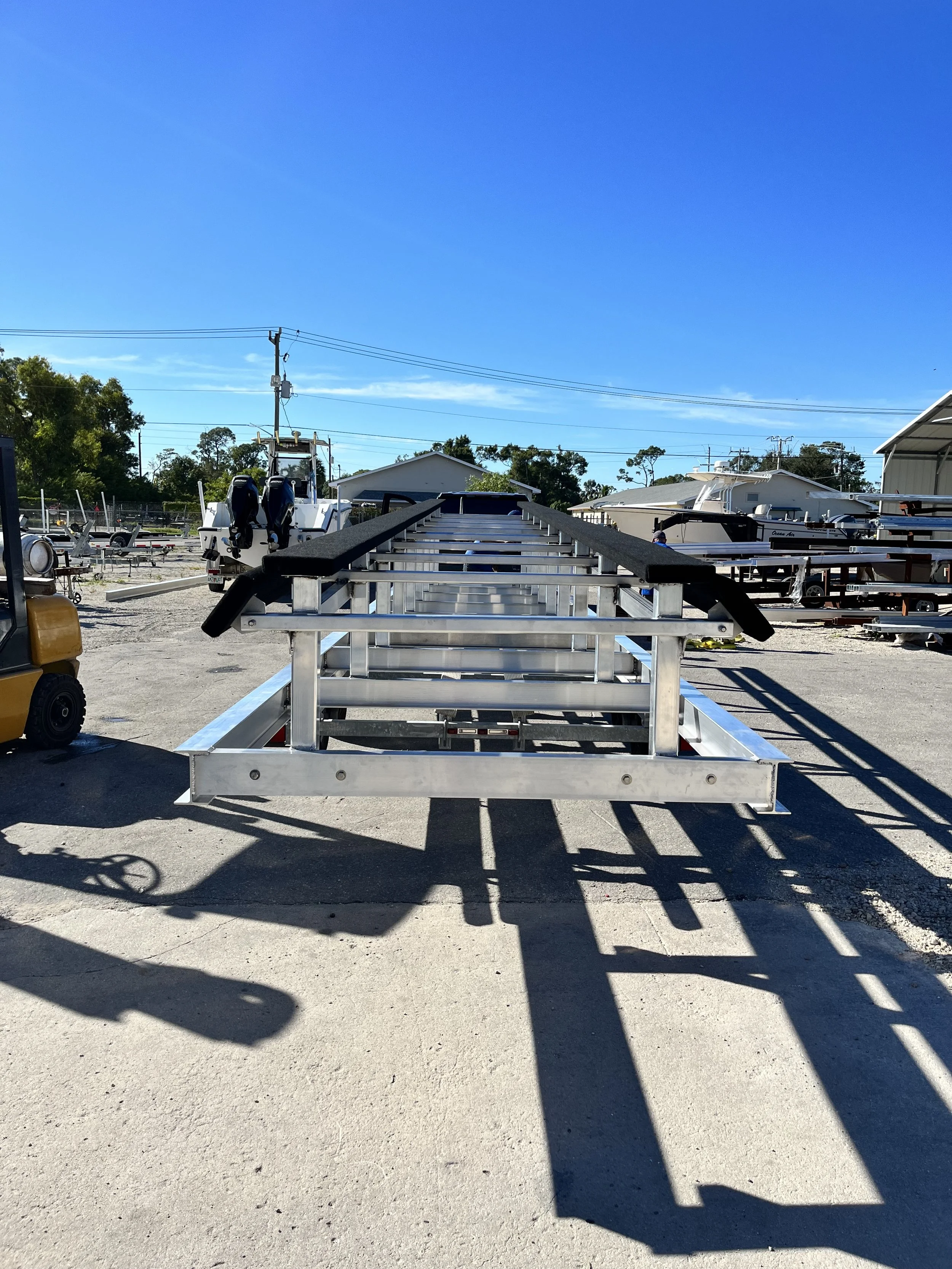
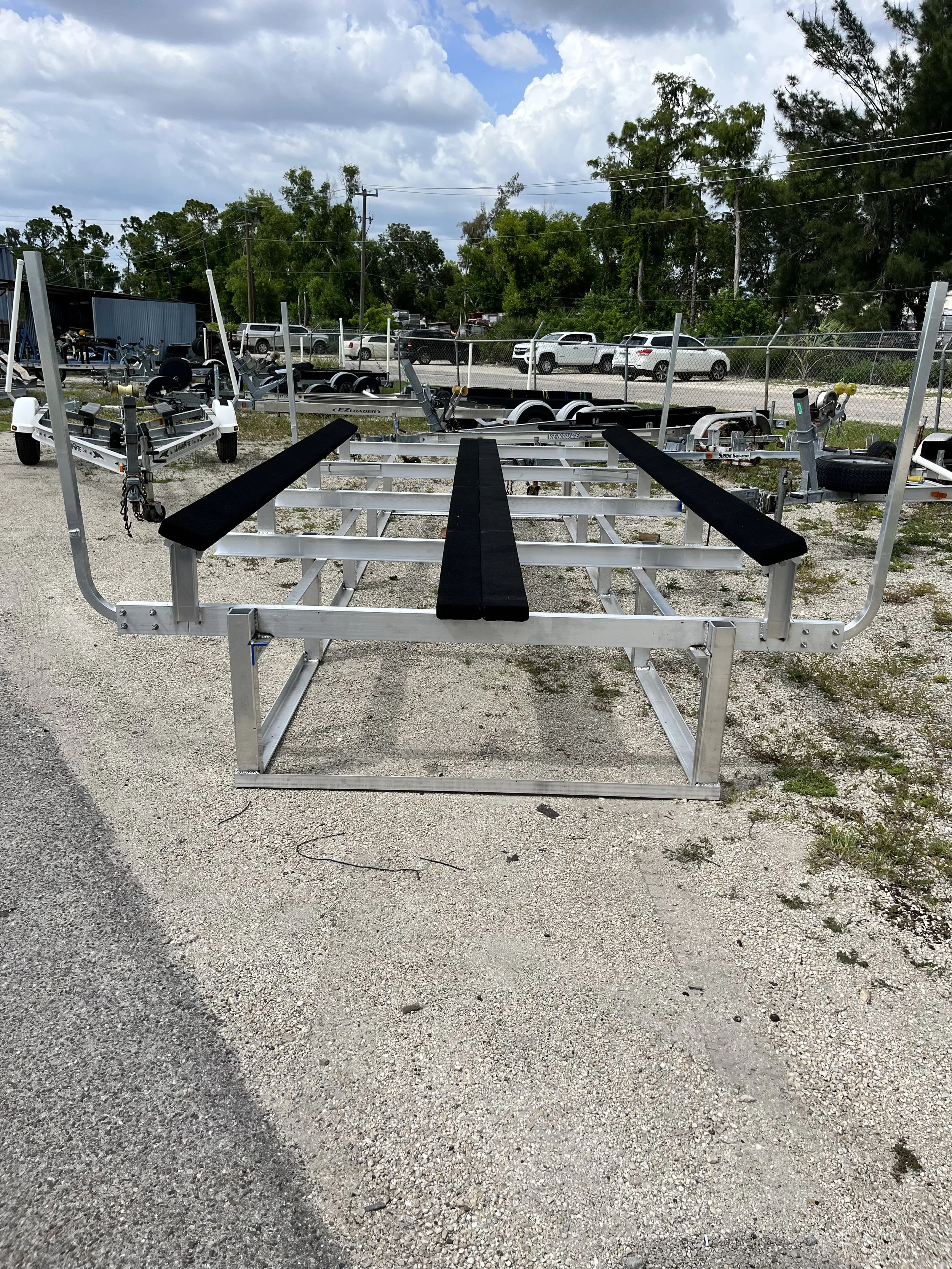
First Load™ Aluminum Boat Cradles
First Load™ Aluminum
Aluminum boat cradles provide dependable support for boats during storage, maintenance, and other marine applications. Designed to accommodate different hull configurations, these structures help distribute a vessel’s weight across designated support points. For boat owners seeking durable marine equipment, aluminum construction offers corrosion resistance, strength, and relatively lightweight handling.
Understanding the different types of boat cradles and their applications can help you select equipment that meets your vessel’s requirements.
What Are Aluminum Boat Cradles?
Boat cradles are support structures designed to hold vessels securely when they are out of the water. Unlike boat trailers, which transport vessels over roads, stationary cradles provide support during storage, inspections, and maintenance.
An aluminum boat cradle uses aluminum structural components to support the vessel’s weight. Aluminum naturally develops a protective oxide layer that helps resist corrosion in marine environments. Properly designed cradles also feature support points positioned to accommodate the boat’s hull.
Aluminum Boat Cradles for Different Boat Types
Different vessels require different support configurations. Choosing the right cradle depends on hull shape, weight distribution, and intended use.
Common applications include:
Fishing boats: Cradles support the hull at designated structural locations to help distribute weight.
Pontoon boats: Support structures must accommodate the pontoons and their specific load-bearing requirements.
Sailboats: Cradles may require specialized keel and hull supports to maintain stability.
Catamarans: Wider configurations require appropriately positioned supports for multiple hulls.
Boat owners should verify that cradle dimensions and contact points meet their vessel manufacturer’s recommendations.
How to Choose the Right Aluminum Boat Cradle
Selecting the right cradle requires more than matching the equipment to your boat’s length. First, determine the vessel’s total supported weight, including fuel, equipment, and accessories. The cradle’s rated capacity must accommodate this load.
Next, measure the boat’s length, beam, and relevant hull dimensions. Proper support placement is essential for distributing weight without placing excessive pressure on unsupported areas.
If the cradle will be used with a boat lift, confirm that it is specifically designed and rated for that application. Not all stationary boat cradles are suitable for lifting.
Benefits of Aluminum Boat Cradles
Aluminum offers several advantages for marine support equipment:
Corrosion resistance: Aluminum resists many forms of environmental corrosion, making it suitable for freshwater and saltwater applications.
Lightweight construction: Aluminum’s lower density compared with steel can make similarly designed cradles easier to handle and position.
Durability: Properly engineered aluminum structures can provide long-term support when maintained and used within their rated capacities.
These characteristics make aluminum boat cradles a practical option for boat owners seeking reliable storage and support equipment.
Maintaining Your Aluminum Boat Cradle
Regular inspections help maintain cradle performance. Check structural components for damage, inspect fasteners for looseness, and examine support pads for excessive wear. After saltwater exposure, rinse appropriate components with freshwater and follow the manufacturer’s maintenance recommendations. Never exceed the cradle’s rated weight capacity.
Explore Aluminum Boat Cradles
Rocket Marine Inc.™ brings years of experience in aluminum boat trailer manufacturing and marine equipment construction. Understanding hull support, structural materials, and weight distribution is essential when evaluating boat cradles.
Whether you’re exploring aluminum cradles for storage or specialized marine applications, Contact Rocket Marine Inc.™ to discuss your boat’s specifications, support requirements, and available equipment options.